
Despite notable progress in key health indicators in recent years, health system performance in Nigeria remains uneven, with significant disparities across states. This is evidenced by findings from successive National Demographic and Health Surveys (NDHS), which revealed sustained improvements in some states, while others remain stagnant, and some continue to regress.
In response, the Federal Ministry of Health and Social Welfare (FMoHSW) has commenced the Nigeria Health System Exemplar Analysis for Action Project, a study aimed at strengthening primary healthcare (PHC) delivery by identifying and scaling proven best practices across states.
Funded by the Gates Foundation, with technical support from Development Governance International (DGI) Consult and Numora Integrated Services Limited (NISL), the study seeks to understand the factors driving success in high-performing states and translate these into actionable lessons for nationwide policy diffusion, ultimately strengthening the health systems across the states.
The study hinges on (a) outcome mapping to identify “exemplar states”, i.e., states demonstrating strong coverage and outcome performance and/or sustained performance improvement, (b) intervention mapping to identify the drivers of progress (i.e., interventions, policies, strategies, actions, etc.) in the exemplar states, (c) contribution analysis to understand how the interventions/strategies were implemented to drive the progress observed, and (d) political economic considerations that helped to translate interventions/policies into the desired outcomes. The study adopts a mixed-methods approach, combining quantitative analysis of state-level datasets with in-depth qualitative case studies.
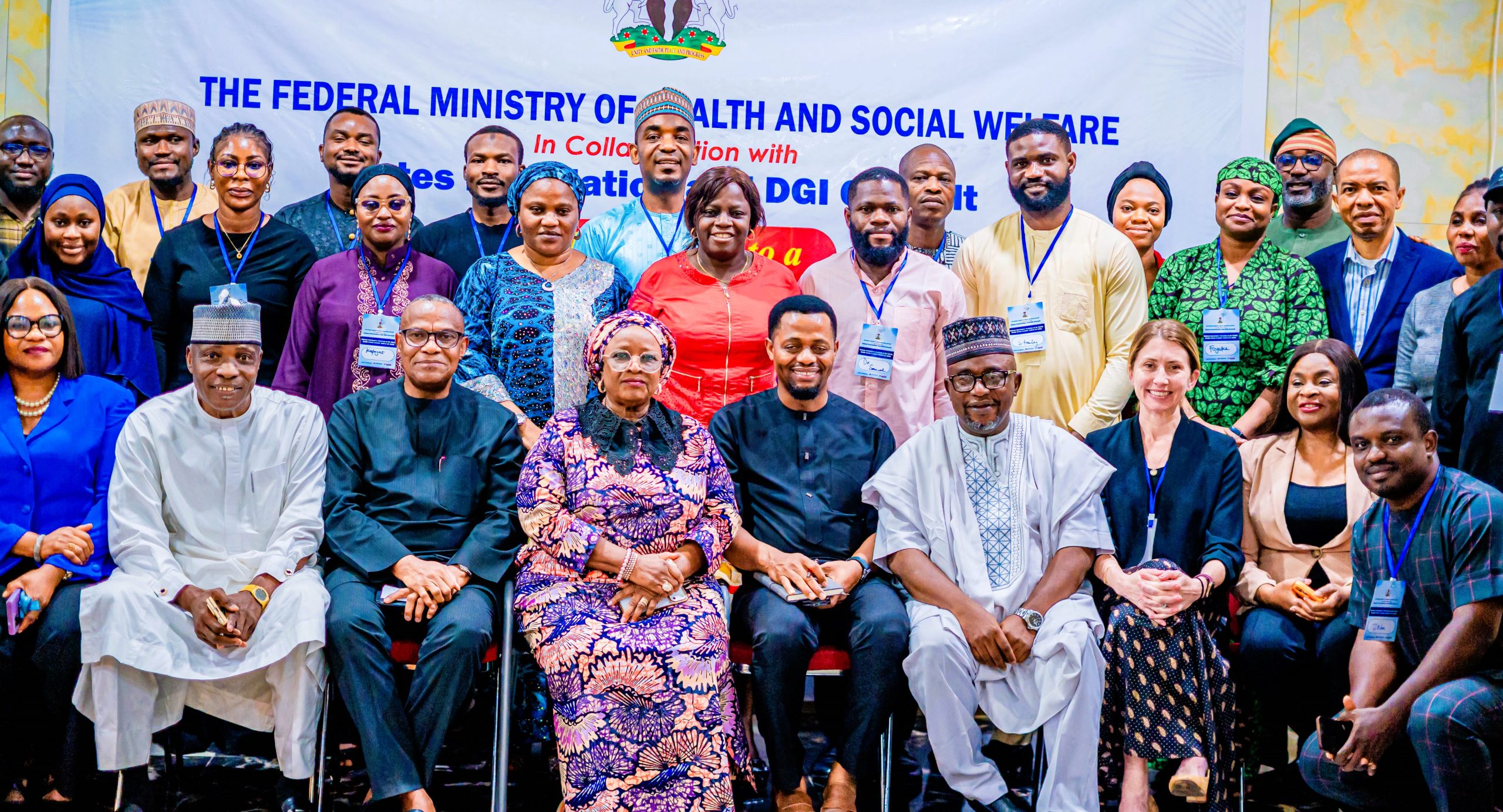
The exemplar states have been selected after a rigorous analysis of coverage and outcome indicators extracted from NDHS 2013, 2018 and 2024, and MICS 2011, 2017 and 2021. These are Gombe, FCT, Kwara, Katsina, Imo, Delta, Edo, Cross River, Lagos and Ondo States. A national stakeholder engagement workshop was held on March 17th, 2026, bringing together key stakeholders across government and partner institutions. The workshop introduced the project’s objectives, scope, and methodology, facilitated stakeholder input to refine the study design and state selection approach, and secured institutional buy-in and operational support for the next phases of implementation. It also fostered alignment on how the study’s findings will inform policy decisions and health system reforms.
The next stage of implementation will focus on data collection in the selected states to generate deeper insights on the drivers of progress in health coverage and/or outcomes in the exemplar states. The project is expected to strengthen learning across states and contribute to more equitable and resilient health systems nationwide.



Comments are closed.